 po polsku
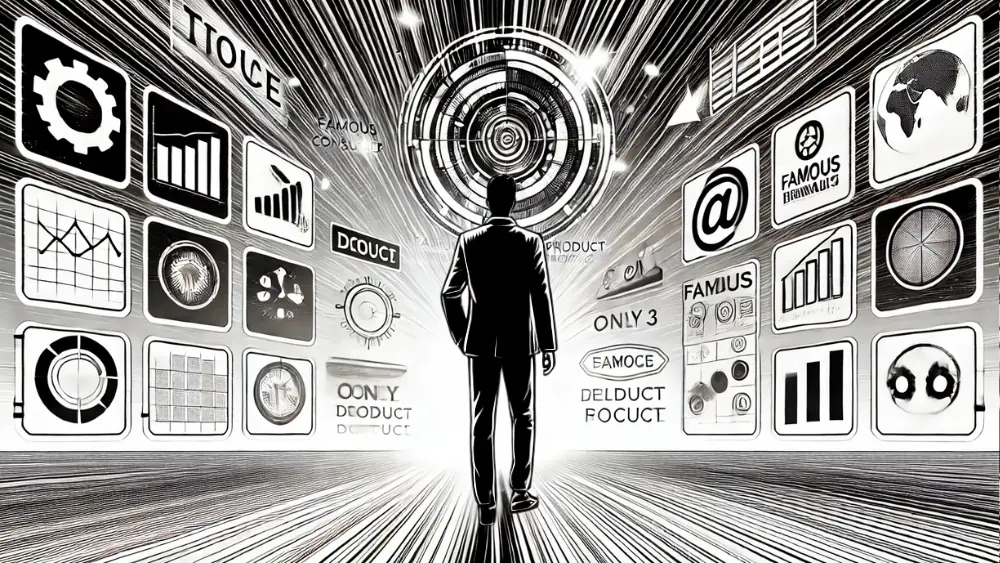 illustration: DALL-E
The modern internet is not a collection of websites. It is a network of connections, citations, recommendations, and algorithmic interpretations. It is an environment where brand visibility is increasingly determined by artificial intelligence systems, not just classic search engines. It is a space where the user increasingly does not search, but asks. Asks Google. Asks ChatGPT. Asks the assistant on their phone. And gets a ready-made answer.
In this new world, many companies are beginning to disappear. Not because they are weak. Not because they have inferior products. They disappear because they exist only on their own website. And today, that is not enough.
The internet has stopped being a collection of pages. It has become an ecosystem of signals
A brand online is no longer perceived as a URL. It is interpreted as a set of information circulating between media, portals, industry sites, reviews, reports, expert articles, and comments. Algorithms today do not ask what a company says about itself. They check what others say about it. This is a fundamental change. Previously, it was enough to tell your story well on your own site. Today, you must be part of a larger narrative. You must exist in the information flow.
Modern visibility does not result from one good website. It is the result of how a brand functions within the entire information environment. Whether it is cited. Whether it is commented on. Whether it is present in the media. Whether it appears in reports. Whether experts refer to it. Whether users review it. Whether other sites link to its content. A brand on the internet today is not a page. It is a reputation.
Visibility as a result of reputation
That is why companies that understand that visibility is no longer a matter of technical SEO, but of trust, are increasingly winning. Algorithms have begun to act like humans. They learn. They compare. They analyze. They check context. And they trust those who are present in reliable sources.
In the traditional model of internet marketing, everything started with a keyword. Today, everything starts with a question. The user no longer types "best company X in town." They ask "who do you recommend." They ask "which company is good." They ask "who is worth working with."
Websites do not answer such questions. Algorithms do. And algorithms do not recommend companies they do not know.
Therefore, mentions have become the key currency of the modern internet. Every mention in an industry article, on a thematic site, in an expert comment, in a report, in an analysis, or in a review is a signal. This is information that reaches search engines and language models. It is remembered, analyzed, and compared with other sources.
Chatbots, voice assistants, and recommendation systems today use massive datasets. These include not only official company pages but also content published in external media. If a brand is present in these sources, artificial intelligence models recognize it. They can describe it. They can compare it. They can recommend it. If a brand exists nowhere outside its own site, for algorithms, it practically does not exist.
Mentions are therefore not an addition to SEO today. They are its foundation. They are the fuel for recommendation systems that will increasingly decide which companies customers reach.
Reputation is beginning to act as a visibility filter.
EEAT or how algorithms learn trust
For several years, Google has been developing a content quality assessment model known as EEAT. It is an acronym for four words: Experience, Expertise, Authoritativeness, and Trustworthiness.
This model was created to distinguish valuable content from mass-generated content, professional from superficial, and reliable from accidental. Importantly, Google does not evaluate a single article. It analyzes the entire information ecosystem around the brand. It checks who publishes the content. Where it is cited. Whether it is linked. Whether it is commented on. Whether the authors are experts. Whether the sources are reliable. Whether the brand is present in trade media. Whether it appears in an expert context.
How clickbait was born? Let's take a look inside headline TRAPS 👇
Artificial intelligence models work in exactly the same way today. They also learn credibility based on the entire information environment. Therefore, brands with a high level of EEAT are more frequently cited, more often recommended, and correctly described by chatbots. Algorithms do not believe declarations. They believe evidence.
The press office as a visibility command center
In this new model, the press office begins to play a special role. But not in the classic sense as a tab with announcements on a corporate website. A modern press office becomes a medium. A center for knowledge distribution. A source of information for journalists, analysts, algorithms, and AI systems.
It can function as an official brand section, but increasingly it also operates as an independent industry service. Such a service does not have to be directly associated with the company. Its role is to create an information space that is natural, neutral, and close to the character of a given market.
It publishes analyses, reports, reviews, summaries, expert comments, product tests, forecasts, and industry news. It becomes a point of reference. A place to link to. To cite. To refer to. From the perspective of Google and AI models, such a service is an impartial source. And impartiality is one of the most important features of credibility. In combination with the brand`s official press office, a central and satellite system is created. On one hand, the company builds its own narrative. On the other, it exists in a neutral industry environment. Together, this creates a multi-layered online presence that is resistant to algorithm changes and marketing fads.
Companies very often invest in a website and advertising campaigns while completely ignoring the fact that algorithms and AI systems learn about the world from the media, industry portals, and expert content. If a brand does not function in this information flow, it simply does not exist for artificial intelligence. That is why today a press office is ceasing to be an addition and is becoming one of the key pillars of visibility.
Why brands that think like publishers win
The world`s largest companies understood long ago that in the new internet, it is not enough to be an advertiser. You must be a publisher. You must create your own media. Your own expert portals. Your own reports. Your own analyses. Your own market narratives.
Technology companies run their own magazines. Financial corporations publish macroeconomic reports. Automotive brands create lifestyle portals. Industrial manufacturers run expert services for engineers. Not because it is fashionable. Because algorithms learn about the world from content. In the world of artificial intelligence, it is not those who shout the loudest who win, but those who are most frequently cited.
A new definition of visibility
Modern brand visibility does not arise from a single action. It is the result of the interaction of many elements. Mentions create information noise. Links give it weight. Reputation introduces order. The EEAT model builds credibility. The press office ties it all into a coherent strategy.
Companies that can look at visibility as an ecosystem build an advantage not only over the competition but also over the algorithms that increasingly decide which brands are recommended to users. In a world where chatbots are starting to replace traditional search engines, presence in their databases becomes crucial. And this presence does not come from brand declarations. It comes from its information environment. Advertising disappears when the budget ends. Presence stays for years.
And that will be the currency of the future.


COMMERCIAL BREAK
New articles in section Marketing and PR
How and why online stores lie. TrustMate report
Marek Jaworowski
Experts from the TrustMate.io platform analyzed the most common procedural errors and inaccuracies that lead Polish online stores to wrongly deny buyers their rights. They also prepared an appeal path for consumers who heard a refusal from customer service.
Online shopping in Poland. Report by the Chamber of Digital Economy
Patrycja Sołtysik, Izba Gospodarki Elektronicznej
For the fourth consecutive year, 100% of internet users declare making a digital purchase at least once, and 93% have shopped online in the last six months. 97% of purchases in Poland involve an internet-connected device at some stage - most commonly a smartphone.
Coffee for moms. This is how they recharge parents' batteries at the Wrocław children's hospital
Reporterzy support
24 hours, 7 days a week, for 3 months. Non-stop. That is the average time a mother spends in an oncology hospital, caring for her child during treatment. A new project has launched at the Przylądek Nadziei (Cape of Hope) children's oncology clinic in Wrocław. In a simple way, it helps parents reduce stress, calm their emotions, and boosts their energy for caregiving. And that directly translates into the effectiveness of the children's treatment.
See articles on a similar topic:
PR in Poland. Ranking of the largest public relations agencies 2025
KFi
The smallest teams often generate the most publications, and agencies outside Warsaw are increasingly capturing media attention. This unexpected distribution of power is one of the key findings from the 2025 PR Agency Ranking in Poland, developed by Widoczni and IMM.
Costs of link building are way overestimated. A major analysis by Adsy
Krzysztof Fiedorek
A guest post for $45? Or maybe $4595? Price differences reach up to 100x, and the market is full of absurdity: sellers demand fortunes, buyers pay a fraction. The beauty industry costs less than literature, and Ireland beats the US hands down. Analysts at Adsy have taken a deep dive into the SEO trade.
Do Ads on TV Annoy You? Think Again, It’s Quite the Opposite!
Bartłomiej Dwornik
Advertisements don’t irritate viewers; instead, they increase the appeal of television programs, according to research published in the Polish edition of Harvard Business Review. Viewers are actually willing to pay more for shows they watched with ad breaks.
SEO and AI in Polish e-commerce 2025. Harbingers analysts’ report
Krzysztof Fiedorek
Although 44.56% of e-commerce traffic comes from organic results, over half of online stores are not seeing growth. The biggest surprise? A staggering 9.5 million monthly visits lost due to dead content. On top of that, 38% of companies still don’t appear in AI-generated answers - a new and growing source of visibility.