 po polsku
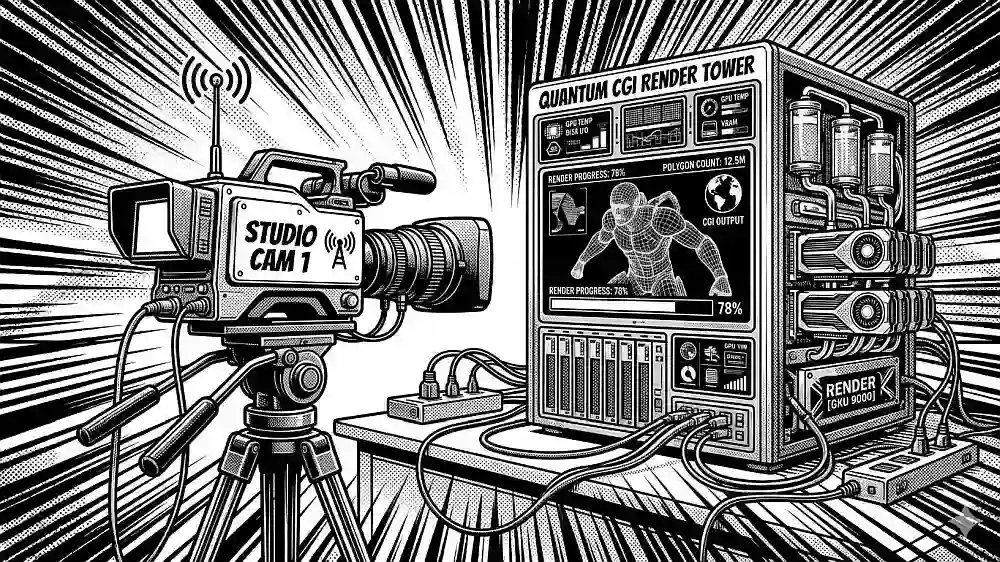 illustration: Gemini AI
The entertainment industry is currently undergoing a period of profound transformation that forces a redefinition of existing content creation models. Traditional production methods are giving way to solutions based on advanced algorithms, changing how stories are told and delivered to viewers. The McKinsey & Company report titled "What AI could mean for film and TV production and the industry`s future" analyzes how these changes will affect the market structure and profit distribution in the coming decade.
We are observing a significant shift in consumption habits, where the viewer`s attention becomes the most sought-after commodity. Between 2022 and 2024, the time spent watching traditional linear television in the United States fell by 4 percent annually. At the same time, streaming platforms and social media recorded double-digit growth, forcing producers to optimize costs while maintaining high material quality.
The introduction of modern tools into the daily work of film studios allows for a significant improvement in the content supply chain. The automation of processes that previously required hundreds of man-hours is becoming a reality, opening new opportunities for creators with smaller budgets. This change does not only concern visual effects but permeates planning, casting, and copyright management processes on a global scale.
Impact of technology on the efficiency of creative processes
Jamie Vickers, Marc Brodherson, Alec Wrubel, and Cléophée Bernard, authors of the McKinsey & Company report, indicate that current implementations of intelligent systems allow for a productivity increase in the pre-production and post-production phases by approximately 5 to 10 percent. Such time savings are possible thanks to the rapid generation of scene visualizations and the automation of repetitive editing tasks. This allows creative teams to focus on the substantive and artistic layers of the project instead of wasting resources on technical aspects of material preparation.
History shows that every major technological leap in the video industry has led to the democratization of content creation and a decrease in operating costs. The transition from light-sensitive film to digital media reduced cinema distribution costs by nearly 90 percent, completely changing the economics of film screening. The current revolution has the potential to bring similar results in the field of image and sound generation, as illustrated by the following table of historical changes in media.
| Innovation | Main market effect | Scale of data impact |
|---|---|---|
| Portable cameras | Development of citizen journalism | 95% drop in equipment costs |
| Digital distribution | Emergence of streaming platforms | Over 200 million subscriptions for market leaders |
| Non-linear editing | Acceleration of material assembly | 50% reduction in post-production time |
Modern systems allow for the creation of content that is almost indistinguishable from real recordings, which generates enthusiasm but also numerous concerns within the industry. Producers must now decide to what extent they want to rely on algorithms versus human labor. This choice will determine not only costs but also the visual identity of future cinematic hits and series.
Algorithms in interaction
The development of digital tools also affects how viewers interact with media. Increasingly, they expect personalized content that corresponds to their individual interests and moods. This is becoming possible thanks to the following factors:
- Using data on user preferences to create dynamic film trailers.
- Application of automatic dubbing that preserves the original voice timbre of a famous actor in every language.
- Creating alternative story endings based on real-time viewer reactions and choices.
- Optimization of image formats for specific mobile devices without the involvement of an editor.
Thanks to these solutions, geographical barriers in content distribution are ceasing to exist. A production created in one country can almost immediately become a global phenomenon because the process of its adaptation to local markets is reduced to a few hours of algorithmic work. This is a huge opportunity for creators from emerging markets who previously had limited access to an international audience.
60% of digital creators do not verify information before publishing 👇
Market scenarios and redistribution of influence
The report`s authors predict that the entertainment industry may follow one of three development paths that will define a new hierarchy of influence. The first variant assumes that the largest studios will use technology to strengthen their dominance through even larger productions of spectacular quality. The second scenario is the flourishing of medium-sized production companies that, thanks to lower costs, will be able to create ambitious content for niche audience groups. The third option is a total revolution in which the boundary between professional and amateur creators will be completely blurred.
Cash flow analysis indicates that the market faces a major challenge related to declining budgets for original content. Film studios are beginning to place more emphasis on profitability and licensing proven hits instead of investing in uncertain new projects. This financial conservatism is a response to the saturation of the market with streaming platforms and the need to fight for every subscriber.
Vickers, Brodherson, Wrubel, and Bernard point out that artificial intelligence could lead to a redistribution of up to 60 billion dollars in annual revenue within the media ecosystem. This money will likely shift from traditional production toward technology providers and data management companies. The following table illustrates the projected changes in video content spending in the coming years.
| Spending category | Year 2022 (billion USD) | Forecast 2030 (billion USD) |
|---|---|---|
| Original content | 66 | 48 |
| Licensing and sports | 42 | 51 |
| Total spending | 108 | 99 |
A reduction in total production expenditure, however, does not have to mean a decrease in the quality of the programs offered. Thanks to technology, creators can achieve the same visual effects with significantly less capital involvement. A key element of success will be the ability to efficiently manage digital processes and quickly adapt to changing legal requirements regarding intellectual property protection.
How to survive in the video market
In the face of these changes, media companies must revise their operational strategies to remain competitive. This process includes a series of adaptive actions, such as:
- Investments in internal data analysis departments and the development of creative algorithms.
- Building strategic partnerships with technology companies from outside the media sector.
- Staff training in the use of modern image and sound generation tools.
- Developing new models for compensating creators for the use of their digital likeness.
Such an approach will allow organizations not only to survive the transformation period but also to occupy a favorable position in the new balance of power. Advantage will be gained by those who can combine traditional artistic sensitivity with the ruthless efficiency of new technologies. The future of media belongs to hybrid teams where humans and machines collaborate to create engaging stories.
Ethics and credibility in the new media reality
McKinsey experts emphasize that alongside technical and financial issues, the industry must face a massive ethical challenge. The ability to manipulate image and voice almost at will creates a risk of losing viewer trust in what they see on screens. Ensuring transparency regarding which elements of production were created with the participation of algorithms is becoming a duty for every reliable broadcaster and content producer.
Copyright in the generative world is another area that requires urgent regulation. Current regulations often do not keep up with technological capabilities, leading to disputes over who owns a work created by a machine based on a huge database of other authors. Resolving these dilemmas will be fundamental to the stability of the labor market in the creative sector and the protection of artists` interests.
7 facts about news on social media 👇
The main barriers that could slow down the adoption of modern solutions in professional studios are:
- Lack of clear legal regulations regarding the authorship of digital works.
- Social resistance and fears of losing the authenticity of the artistic message.
- High initial costs of building a secure infrastructure for data processing.
- Difficulties in maintaining narrative consistency in long forms generated automatically.
Despite these obstacles, the direction of change seems inevitable. The film and television industry has always been a pioneer in adopting innovations, from the introduction of sound to color and then computer graphics. Each of these stages raised concerns but ultimately led to the enrichment of film language and the opening of new horizons for the imagination of creators and viewers worldwide.
The maturity of the media sector in 2026 manifests in a conscious approach to technology as a tool that supports rather than replaces human creativity. The greatest successes will be achieved by those productions that can evoke real emotions, regardless of whether a brush, a camera, or an advanced graphics processor was used to create them. Technology remains the background for universal stories that have always connected people, regardless of the medium.
The full McKinsey & Company report, What AI could mean for film and TV production and the industry`s future, is available at mckinsey.com webpage.


COMMERCIAL BREAK
New articles in section Skills and knowledge
Audience mismatch. When and why short videos ruin a Youtube channel
KF × Gemini Deep Research
Shorts viewers stay in "swipe mode" and expect instant gratification. Watching a 30-minute documentary requires an active decision to click and a willingness for longer engagement. In specific situations, these mixed signals can seriously harm a Youtube channel.
How to reliably report uncertain data. A scientific meta-analysis
KFi
Numbers and mathematical intervals have a calming effect on news consumers. Political views, intelligence levels, or reader education do not alter how people process information about incomplete knowledge. Here are the results of dozens of media experiments regarding trust in the press.
War reporter in the new reality. Evolving techniques, same purpose
KFi
What happens when war breaks out just across the border and journalists aren't ready? Polish reporters faced that question after Russia invaded Ukraine in 2022. Lacking training, they improvised: blurred details, hid names, and balanced trauma with truth.
See articles on a similar topic:
Chronemics, or The Language of Time. What Your Watch Says About You
Bartłomiej Dwornik
You walk in on time, glance at your watch, wait five minutes, then leave. Someone else is thirty minutes late and acts like they had to wait for you. Time in communication is a tool, a weapon, and a status marker. Welcome to the world of chronemics. The study of how time affects human relationships.
Social Influence of Virtual Avatars. A Study by SWPS University
KF
How confident are we in our judgments, and how well can we defend our own opinions? There’s a good chance that we might change our views under the influence of a group of avatars in virtual reality. Researchers from SWPS University studied human susceptibility to the opinions of others, including virtual characters.
Common Mistakes in Creating Content for Websites
Bartłomiej Dwornik
What mistakes should you avoid at all costs to ensure that the often costly work of attracting traffic from Google doesn’t go to waste? Check out the insights from experts asked by Interaktywnie.com in the recently published report "Search Engine Marketing."
Preschoolers Expose Hypocrites. Findings from SWPS University
ekr/ bar/
Even preschool children are able to recognize hypocrites, whom they rate worse than other people who break the rules, researchers from SWPS University in Poland demonstrate. Caregivers should therefore pay attention to whether their actions are consistent with their declarations, because children are careful observers of moral integrity.