 po polsku
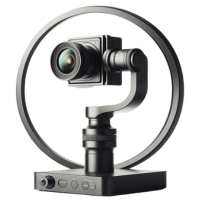
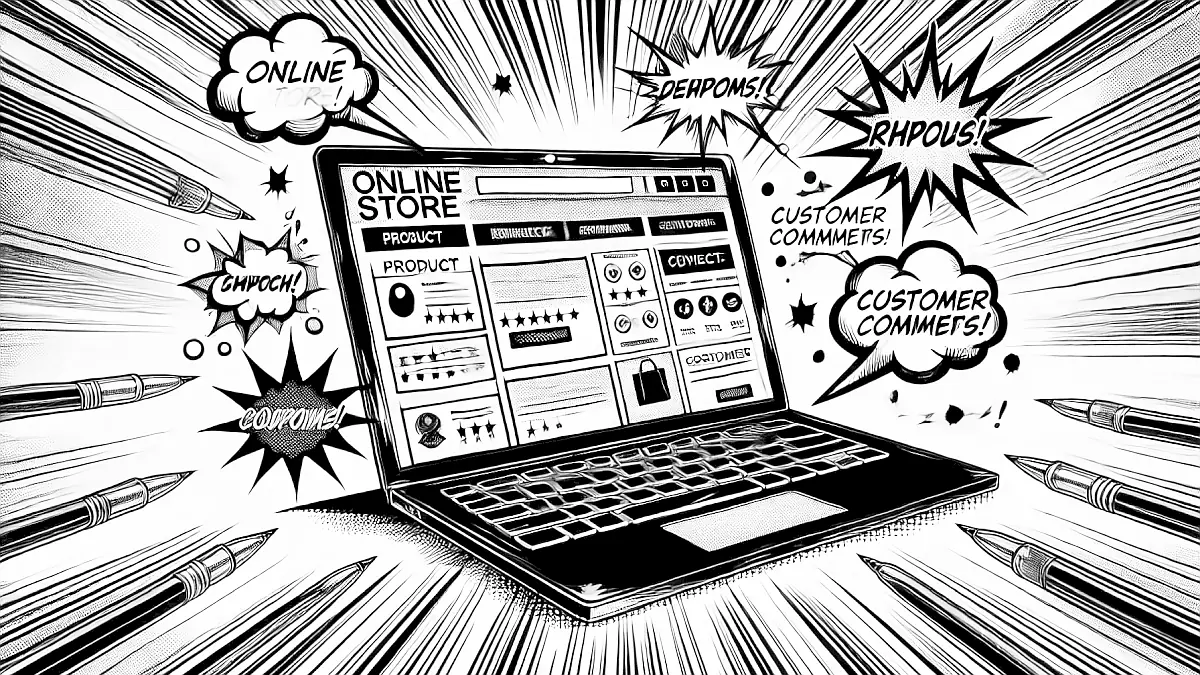 illustration: DALL-E
According to the report "E-commerce Visibility in the AI Era IX 2025" prepared by TrustMate.io, companies must shift their strategy. Instead of fighting for clicks, they should focus on building credibility so that AI considers them worth recommending.
Modern models like ChatGPT, Gemini, or Claude do not show a list of search results. They provide a ready answer, created from synthetic analysis of data across the internet. The user doesn’t click but asks - and AI answers, often without giving a source. As data shows, this form of search is already reshaping the landscape.
| Indicator | Value | Source |
|---|---|---|
| Share of "zero-click" searches in the EU | 60% | TrustMate.io / Pew Research Center |
| Decline in use of traditional search engines by 2026 | 25% | Gartner |
| Drop in organic traffic after AI Overviews | 25-70% | The Guardian |
| Lower willingness to click after AI Overview | ~50% | Pew Research Center |
AI models do not operate like search engines. They judge. They analyze everything: publications, reviews, posts, but give the most attention to authentic customer opinions. According to Jerzy Krawczyk, CEO of TrustMate.io, these become the new currency of trust - because they are hard to fake and serve as direct proof of experience.
In the era of generative artificial intelligence, the GEO (Generative Engine Optimization) strategy becomes vital. Its goal is not to rank high on Google, but to appear in AI-generated responses. At the heart of this strategy lies the E-E-A-T model - experience, expertise, authority, and trustworthiness - originally created by Google but now recognized by all major language models.
Companies that want to stay visible should act systematically. The TrustMate.io report identifies three pillars of an effective GEO strategy:
- Create content that answers customer questions - publish case studies, tests, and analyses.
- Collect and verify reviews after every transaction - each review is a signal to AI.
- Implement structured data - it helps algorithms understand the content.
Having good reviews is no longer enough - they must be detailed, naturally written, and preferably enhanced with multimedia. TrustMate points out that thanks to intelligent system prompts, the average length of reviews in Polish e-commerce has increased from 20 to over 230 characters. Additionally, each review can include a photo, video, or translation, which significantly raises its value in the eyes of AI.
- AI is not a search engine. It’s a reputation engine - emphasizes Jerzy Krawczyk, CEO of TrustMate.io. - Artificial intelligence, an algorithm, won’t click a link. But it will remember what others said about your brand.


COMMERCIAL BREAK
New articles in section Marketing and PR
How and why online stores lie. TrustMate report
Marek Jaworowski
Experts from the TrustMate.io platform analyzed the most common procedural errors and inaccuracies that lead Polish online stores to wrongly deny buyers their rights. They also prepared an appeal path for consumers who heard a refusal from customer service.
Online shopping in Poland. Report by the Chamber of Digital Economy
Patrycja Sołtysik, Izba Gospodarki Elektronicznej
For the fourth consecutive year, 100% of internet users declare making a digital purchase at least once, and 93% have shopped online in the last six months. 97% of purchases in Poland involve an internet-connected device at some stage - most commonly a smartphone.
Coffee for moms. This is how they recharge parents' batteries at the Wrocław children's hospital
Reporterzy support
24 hours, 7 days a week, for 3 months. Non-stop. That is the average time a mother spends in an oncology hospital, caring for her child during treatment. A new project has launched at the Przylądek Nadziei (Cape of Hope) children's oncology clinic in Wrocław. In a simple way, it helps parents reduce stress, calm their emotions, and boosts their energy for caregiving. And that directly translates into the effectiveness of the children's treatment.
See articles on a similar topic:
Do Ads on TV Annoy You? Think Again, It’s Quite the Opposite!
Bartłomiej Dwornik
Advertisements don’t irritate viewers; instead, they increase the appeal of television programs, according to research published in the Polish edition of Harvard Business Review. Viewers are actually willing to pay more for shows they watched with ad breaks.
Foreign online stores face distrust in Poland. See TrustMate Report
KFi
Poland’s e-commerce market is booming, yet foreign online stores still struggle to earn consumer trust. Why do Polish shoppers prefer local sellers? A new report uncovers the roots of this distrust and reveals what international brands must do to bridge the gap.
Advertising Without Cookies. Is the Industry Ready for a Digital Revolution?
Krzysztof Fiedorek
The year 2024 was set to bring a revolution to the advertising industry as Google announced the removal of cookies in the Chrome browser for millions of users, sparking the beginning of a cookie-free era. However, Google’s change of heart surprised the market. A report on this topic was prepared by analysts from ID5.
Large Online Ads vs. AdBlock. Poland Leads in Both Metrics
BARD
Large-format online ads make up 14% of Poland's online market, according to analyses by Gemius. This is the highest percentage among all surveyed markets. Paired with data on the rising popularity of ad-blocking - done by one-third of Polish internet users - it raises questions about the future of these ads.