
 po polsku
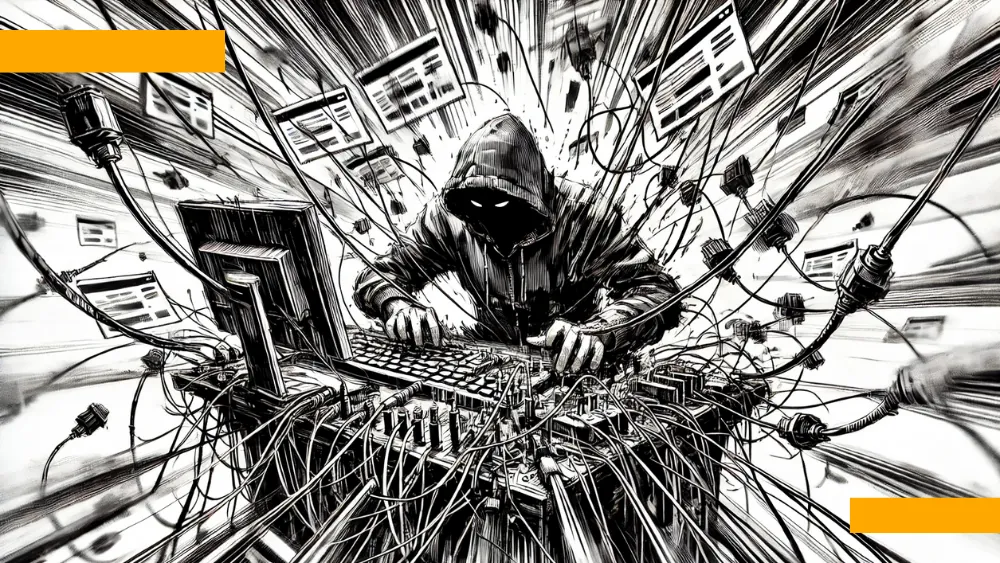 illustration: DALL-E
Last year, researchers from the UWM Institute of Political Science implemented the project "The Impact of Russian Disinformation on Shaping Public Opinion in Eastern European Countries - Analysis and Counteraction Strategies." The project`s goal was to examine the mechanisms of Russian disinformation as a hybrid tool in Moldova and Georgia and to develop specific strategies to counter these threats.
As noted by Dr. Wojciech Kotowicz from the Institute of Political Science at the UWM Faculty of Social Sciences, during the research, scientists identified several fundamental trends that will shape the disinformation landscape in the near future. Among them is the increasingly common use of artificial intelligence to generate false content.
- Operation Matryoshka, which we studied in the context of Moldova, was one of the first large-scale campaigns to use AI to create deepfakes, false press articles, and conversational bots that were practically indistinguishable from real users. This technology is becoming increasingly accessible and sophisticated - the scientist noted.
As he described, there have already been recorded cases of video deepfakes depicting European politicians speaking in a way that never occurred, but the quality of these materials was so high that even experts had difficulty identifying them.
Personalization of disinformation and social segmentation
Another trend is the personalization of disinformation. - Thanks to advanced data analytics and user profiling, Russian disinformation campaigns can now deliver different narratives to different audience groups, maximizing their effectiveness. During the research in Georgia, we discovered that the same disinformation campaign used completely different arguments depending on whether it was directed at urban or rural residents, the young or the elderly, the religious or the secular - he explained.
- For older rural residents, the narrative focused on the threat to traditional values and religion, while for young urban residents, economic arguments and fears of losing sovereignty were used. This segmentation makes countering disinformation much more difficult because we are not dealing with one consistent narrative, but with many tailored messages - he pointed out.
He cited the situation in Moldova as an example, where researchers observed how a narrative about the corruption of pro-European elites was built over the years, which ultimately translated into significant support for pro-Russian options in elections. This was not the work of a single election campaign but the result of a systematic, multi-year effort.
According to Wojciech Kotowicz, the situation is similar in Poland. - Russian disinformation does not focus only on current events but tries to build long-term narratives that undermine our European and Atlantic identity - he noted.
How clickbait was born? Let's take a look inside headline TRAPS 👇
- We must be prepared for disinformation to exploit real social problems and frustrations. The most effective disinformation is not entirely false; it is based on real problems such as inflation, the housing crisis, and social inequalities, and presents simplified, populist solutions, often blaming the West, the European Union, or local elites - he emphasized.
According to the researcher, Russian disinformation is most successful where it encounters strong internal social and political divisions. - Russia does not try to impose a single narrative but creates a multitude of contradictory messages to cause cognitive chaos and a sense of helplessness in the recipient - he concluded.
The grant for the UWM research project was awarded by the Juliusz Mieroszewski Dialogue Centre as part of the 3rd Open Competition. The project was carried out from June 1 to October 31 last year by a research team from the Institute of Political Science. The project manager was Dr. Wojciech Kotowicz, and the participating experts included: prof. dr hab. Arkadiusz Żukowski, dr hab. Waldemar Tomaszewski, prof. UWM, dr hab. Krzysztof Żęgota, prof. UWM and dr hab. Marcin Chełminiak, prof. UWM.
source: naukawpolsce.pl


COMMERCIAL BREAK
New articles in section Law in media
National security as a tool to limit press freedom
KFi
Governments worldwide increasingly use national security to suppress information legally. Reporters Without Borders issued a comprehensive report "National security as A weapon against Journalism", which carefully analyzes this growing global trend.
Blood in the world of media. The IFJ report on journalists killed in 2025
KFi
The International Federation of Journalists has published a shocking document titled 2025 Killed List Report. The increase in violence against media workers is visible all over the world. Last year, 128 people lost their lives. They die because of their courage in revealing facts that authorities try to hide.
Dietary supplement ads in Poland. Who keeps influencers in check?
Newseria, KFi
One in three Polish internet users considers influencer recommendations when deciding on medicines and dietary supplements. Although promotion of such products is regulated, there are still cases of advertising that skirt the law.
See articles on a similar topic:
Quishing. How to Protect Yourself from QR Code Scams
Krzysztof Fiedorek
According to analysts from Keepnet Labs, quishing will be one of the most serious threats to businesses and individuals in 2024. In 2023, the number of data or money theft cases using this method increased globally by 587%.
Children’s Online Safety. Clickmeeting Analysis
KrzysztoF
Over half of surveyed parents believe their children are aware of the dangers lurking online. At the same time, just over 40 percent of respondents admit to taking steps to protect their children’s privacy online.
Unsolved Journalist Murders: CPJ Report 2024
KFi
Haiti and Israel have topped the latest report by the Committee to Protect Journalists (CPJ) on impunity in journalist murders. Worldwide, 80% of cases remain unsolved. The report explores why those who kill journalists evade accountability, highlighting the countries leading this grim statistic and its impact on press freedom.
What Data Google Collects. Privacy on the Internet
KF
According to a gs.statcounter.com report – May 2018, Google captures over 97% of internet users. Currently, many free applications are available to users. What does Google collect? When using the most popular search engine, we should be aware of how our data is collected and used.