 po polsku
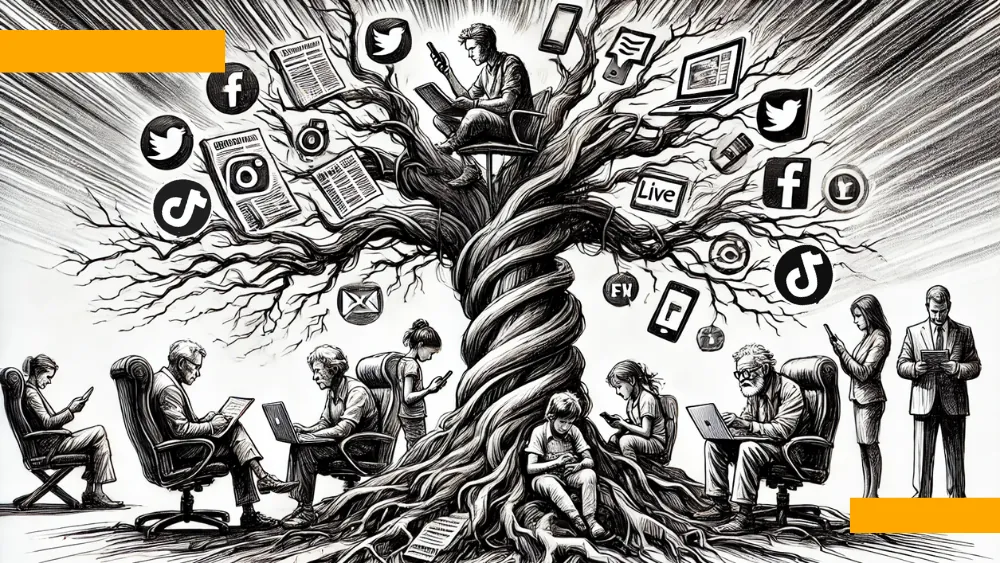
illustration: DALL-E
Just a few years ago, it would be hard to place such scenes side by side. Today, however, they all become part of the same daily life. Why do we buy things that are supposed to give us relief? Where does the need for "small rewards" or postponing decisions come from? What causes digital fatigue and growing caution toward the world? The second edition of the "KONSUMER 2026" report brings answers to these questions. This latest release of the project, prepared by the BERRY Kolektyw Kreatywny agency, offers a fresh look at current social, consumer, and cultural trends. It attempts to decode the modern decisions of Polish people - from shopping and technology to relationships and daily rituals.
- A simple division into young and old or Poland A and B has completely broken down. People function in different rhythms of life, various levels of overload, and distinct bubbles of everyday reality - says Marcin Mystkowski, strategist and founder of the BERRY Kolektyw Kreatywny agency. - That is exactly why we created a report that does not try to lock people into simple targets. Instead, it shows the tensions and emotions of modern Poland and how they translate into our consumer choices.
This aspect strongly stands out in the study. Our choices are increasingly driven by the desire to regain control over life, bring back energy, find harmony, or feel that our efforts truly make sense. Wallet size or aspirations are losing their primary meaning. A discount store, a parcel locker, a banking application, a medical teleconsultation, noise-canceling headphones, or a vacation closer to home become more than just a convenience. They turn into daily tools for managing uncertainty. And we are not alone in this - despite huge social differences and the worldview polarization visible at every step - Polish people still share a lot. Home rituals, small forms of comfort, the need for closeness, fatigue with information chaos, and growing caution toward the surrounding world form a common profile for nearly all analyzed age groups.
Five generations, five different experiences of modernity
The report describes five Polish generations - from Boomers to Alphas. Each generation received its own detailed portrait based on data, social insights, and an analysis of daily experiences.
- For many Boomers (born between 1946 and 1964, today: 62-80 years old), the most important experience now is an active "new old age". People over sixty increasingly operate digitally, travel, and financially support children and grandchildren, while refusing to be defined solely by age. Meanwhile, Generation X (born 1965-1979, today: 47-61 years old) tries to find balance after years of living in a continuous "delivery" mode: managing work, loans, family duties, and daily responsibility.
- Millennials (born 1980-1994, today: 32-46 years old) live with a sense of a permanent change in the rules of the game. They grew up believing that personal growth and hard work would bring stability, but reality repeatedly broke this scenario - from economic crises to rapid technological and social changes.
- Younger generations already function in a completely different rhythm. Gen Z (born 1995-2009, today: 17-31 years old) protects their attention, energy, and mental health much more strongly today, and authenticity is increasingly becoming more important to them than status or grand brand declarations.
- The youngest, Gen Alpha (born 2010-2024 · today: 2-16 years old), grow up in a world of total digital immediacy - a world of AI, algorithms, and constant dopamine stimulation, where patience ceases to be a natural experience of daily life.
The observations above are merely a fragment of a much broader story about how different groups of Polish people try to find their way in a world of dynamic social, technological, and cultural changes. Experts from the Berry Kolektyw Kreatywny agency also draw attention to groups that often fall out of mainstream marketing narratives. These include night-shift workers (over 2 million Poles!), residents of small towns for whom a local Facebook group, the volunteer fire department, or a rural women`s club form the real infrastructure of life, passion communities, people with disabilities, or migrants who increasingly co-create Polish daily reality.
- Consumers today are not waiting for more messages about revolution and being close. Most people are simply tired of too much noise - concludes Marcin Mystkowski. - Advertising can be valuable only when it truly simplifies something, gives relief, helps make a decision, or simply respects the attention of the recipient. Otherwise, it becomes just another stimulus that people try to defend themselves against more and more often.
The findings of the "KONSUMER 2026" report were presented during the most important advertising industry conference in Poland - this year`s IAB Forum, held in Warsaw on May 27-28, 2026.
The full version of the "KONSUMER 2026" report can be downloaded at: https://kolektywkreatywny.pl/konsumer2026/


COMMERCIAL BREAK
New articles in section Marketing and PR
How and why online stores lie. TrustMate report
Marek Jaworowski
Experts from the TrustMate.io platform analyzed the most common procedural errors and inaccuracies that lead Polish online stores to wrongly deny buyers their rights. They also prepared an appeal path for consumers who heard a refusal from customer service.
Online shopping in Poland. Report by the Chamber of Digital Economy
Patrycja Sołtysik, Izba Gospodarki Elektronicznej
For the fourth consecutive year, 100% of internet users declare making a digital purchase at least once, and 93% have shopped online in the last six months. 97% of purchases in Poland involve an internet-connected device at some stage - most commonly a smartphone.
Coffee for moms. This is how they recharge parents' batteries at the Wrocław children's hospital
Reporterzy support
24 hours, 7 days a week, for 3 months. Non-stop. That is the average time a mother spends in an oncology hospital, caring for her child during treatment. A new project has launched at the Przylądek Nadziei (Cape of Hope) children's oncology clinic in Wrocław. In a simple way, it helps parents reduce stress, calm their emotions, and boosts their energy for caregiving. And that directly translates into the effectiveness of the children's treatment.
See articles on a similar topic:
#POMAGAM2026 Can a New Year's resolution go viral?
wspieramy
Is a million good deeds a lot? Ten-year-old Emilka wants to find out. She just announced the I Resolve to Help campaign on the internet and urges everyone to make a unique New Year's resolution. That we help each other more often in 2026.
Brand visibility in the age of algorithms
Aleksander Pawzun
A few years ago, everything was simpler. It was enough to have a good website, do SEO, run a blog, and publish on social media. Whoever was systematic was visible. Whoever invested in content and positioning gained customers. That world no longer exists.
Do Ads on TV Annoy You? Think Again, It’s Quite the Opposite!
Bartłomiej Dwornik
Advertisements don’t irritate viewers; instead, they increase the appeal of television programs, according to research published in the Polish edition of Harvard Business Review. Viewers are actually willing to pay more for shows they watched with ad breaks.
Child with dyslexia. A therapist's guide for parents
patronat Reporterzy.info
Dyslexia is a specific developmental disorder affecting reading and writing abilities. It can significantly impact a child's educational and emotional development. In Poland, as well as worldwide, it is being diagnosed more frequently. [#MAMYNATORADĘ under the patronage of Reporterzy.info]