 po polsku
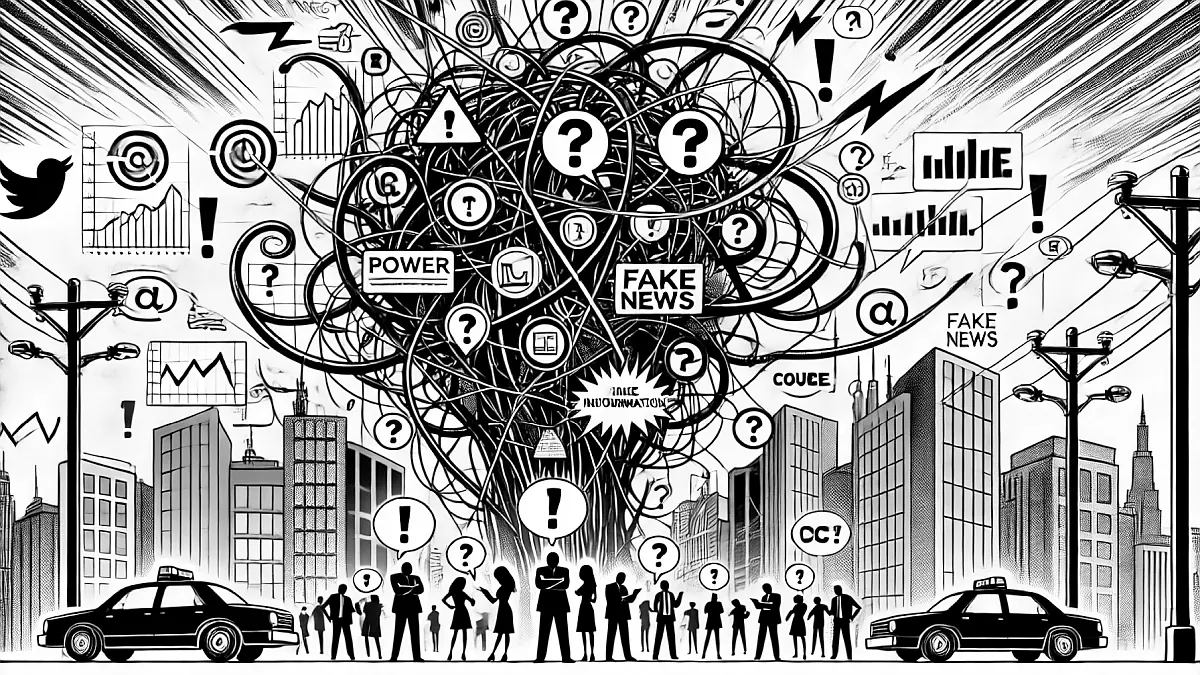 illustration: DALL-E
Translation supported by Google Gemini
Her study is titled "Russian Voice Behind the Great Wall: Russian-Chinese Cooperation on the Example of Narratives Regarding Poland". Propaganda moves from Russia to Asian outlets before reaching European audiences as objective news from Beijing.
Average Polish readers place greater trust in Chinese sources than in direct messaging from Moscow. Because China is not engaged in open military aggression against Poland, citizens rarely perceive an immediate security threat. Russian manipulators strategically exploit this weakness to spread harmful statements through Asian internet platforms. Over an eight-month period, NASK analysts monitored more than 25 Chinese channels, detecting 966 items that matched Russian disinformation content.
| Online platform | Number of detected materials |
|---|---|
| 523 | |
| Sina | 255 |
| Other services | 188 |
Patrycja Krzyśpiak, author of the report "Russian Voice Behind the Great Wall: Russian-Chinese Cooperation on the Example of Narratives Regarding Poland", points out that Asian newsrooms systematically publish harmful material. Researchers identified several recurring themes that weaken Poland`s international standing and undermine Western unity.
- They depict Poland as an aggressive nation seeking military confrontation.
- They place full responsibility on NATO for triggering conflicts in Europe.
- They describe the European Union as politically and socially unstable.
- They spread false historical narratives that blame Poland for starting World War II.
In her publication "Russian Voice Behind the Great Wall: Russian-Chinese Cooperation on the Example of Narratives Regarding Poland", expert Patrycja Krzyśpiak observes that Asian portals also publish contradictory messages. For example, they portray Poland simultaneously as a defender of civilization and as an isolated, backward country. This deliberate tactic creates chaotic information noise, fuels anxiety, and confuses readers across Europe.
Beijing and Moscow seek to weaken the West
Although both nations pursue distinct tactical goals on specific issues, their strategic aims remain fully aligned. In her report "Russian Voice Behind the Great Wall: Russian-Chinese Cooperation on the Example of Narratives Regarding Poland", Patrycja Krzyśpiak provides examples of joint efforts to undermine the international order established by the United States and the European Union. Moscow and Beijing promote a vision of a new world order where they present themselves as peacekeepers.
The Propaganda Department of the Chinese Central Committee tightly controls the domestic digital environment. No political posts circulate on social media without quiet approval from party leaders in Beijing. Chinese authorities consciously permit Russian state media to operate under official information agreements. When Polish diplomats lodge formal protests, Asian officials claim the posts originate from private accounts.
Authoritarian security services deploy sophisticated cognitive operations to erode public trust in state institutions. Independent studies show that European perceptions of China have improved recently, despite ongoing human rights concerns. This shift in public sentiment stems from calculated online campaigns designed to weaken liberal democracies.
In the report "Russian Voice Behind the Great Wall: Russian-Chinese Cooperation on the Example of Narratives Regarding Poland", researcher Patrycja Krzyśpiak stresses that long-term information operations cause a continuous decline in public confidence. Citizens require greater awareness to distinguish coordinated propaganda from general misinformation and defend democratic systems effectively.
source: PAP naukawpolsce.pl


COMMERCIAL BREAK
New articles in section Media industry
Health disinformation on the internet. Diagnosis from an algorithm
Katarzyna Czechowicz
Health disinformation can cause a cancer patient to see a doctor when it is too late for effective treatment. It can also undermine trust in doctors and public institutions. As a result, people may refuse to cooperate even during a real external threat, experts warn.
Feminatives are not a given. How Polish women talk about their professions
SWPS
Polish women still rarely use female job titles. This comes from the latest report by the Center for Research on Social Relations at SWPS University. Women's professional activity proved to be a significant factor in using feminatives.
Who trusts articles written by artificial intelligence? Results of a study from China
Krzysztof Fiedorek
Young readers trust machines more than human writers. When they consume news, they prefer the cool objectivity of algorithms over human emotions. They believe that articles created by AI are objective. As they interact with these texts more frequently, they rarely notice any harmful biases in them.
See articles on a similar topic:
Fake News and Disinformation in Poland. Scale, Impact and Future
Bartłomiej Dwornik
Where do the sources of disinformation lie, and how large is the scale of this wave? Why are we so susceptible to false information, and what role do traditional media play in this puzzle? Let’s shed some light on these issues and face the question: can the battle against the flood of disinformation still be won?
Artificial Intelligence in the Media. Reuters Digital News Report 2024
Krzysztof Fiedorek
AI has gained prominence in recent years, and its application in producing, distributing, and presenting news content continues to grow. However, this development is met with mixed feelings by audiences, which has significant consequences for media trust and its future.
Most influential women in polish marketing and business
Arkadiusz Zbróg, IMM
Joanna Malinowska-Parzydło, Dagmara Pakulska, Natalia Hatalska, Anna Ledwoń-Blacha, Monika Smulewicz, and Dominika Bucholc. This is the top of the list of the most influential women in marketing and business, developed by the Widoczni agency in cooperation with the Institute for Media Monitoring (IMM).
Children and artificial intelligence. The generation of a global experiment is growing
Joanna Sokołowska, UNICEF Polska
A UNICEF analysis based on new data from 10 countries shows that at least 20 million children have already used artificial intelligence (AI). Many of them are ahead of adults, adopting these technologies at a pace more than three times faster.