
 po polsku
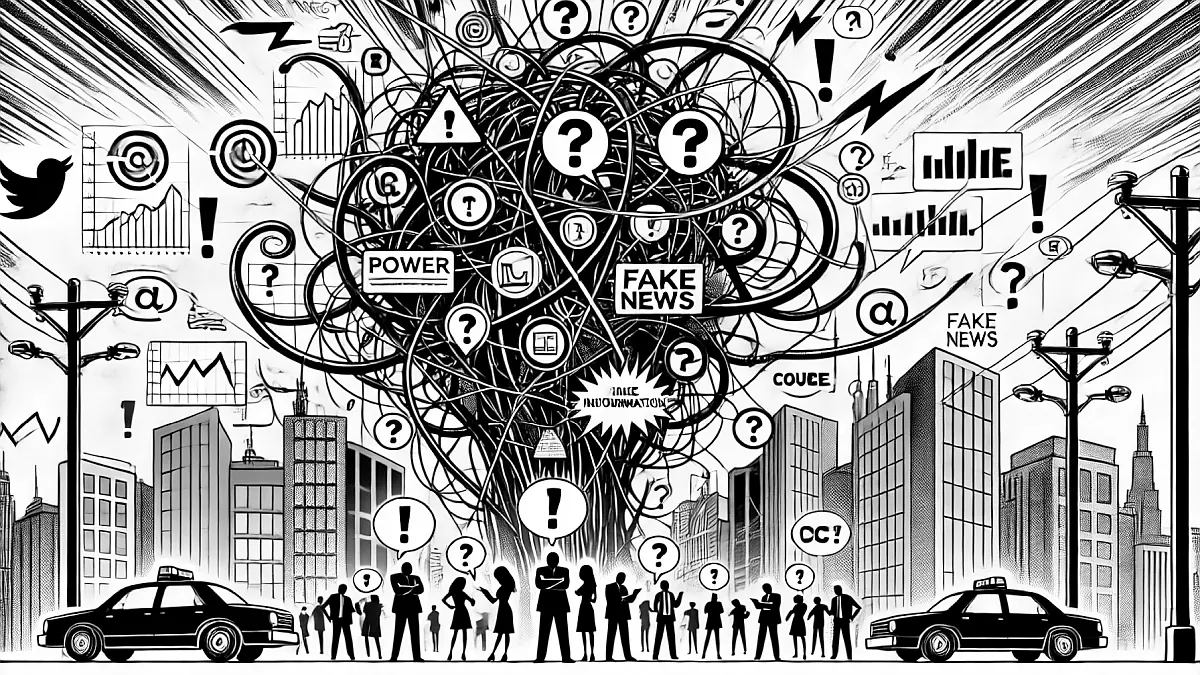 illustration: DALL-E
Translation supported by Google Gemini
Her study is titled "Russian Voice Behind the Great Wall: Russian-Chinese Cooperation on the Example of Narratives Regarding Poland". Propaganda moves from Russia to Asian outlets before reaching European audiences as objective news from Beijing.
Average Polish readers place greater trust in Chinese sources than in direct messaging from Moscow. Because China is not engaged in open military aggression against Poland, citizens rarely perceive an immediate security threat. Russian manipulators strategically exploit this weakness to spread harmful statements through Asian internet platforms. Over an eight-month period, NASK analysts monitored more than 25 Chinese channels, detecting 966 items that matched Russian disinformation content.
| Online platform | Number of detected materials |
|---|---|
| 523 | |
| Sina | 255 |
| Other services | 188 |
Patrycja Krzyśpiak, author of the report "Russian Voice Behind the Great Wall: Russian-Chinese Cooperation on the Example of Narratives Regarding Poland", points out that Asian newsrooms systematically publish harmful material. Researchers identified several recurring themes that weaken Poland`s international standing and undermine Western unity.
- They depict Poland as an aggressive nation seeking military confrontation.
- They place full responsibility on NATO for triggering conflicts in Europe.
- They describe the European Union as politically and socially unstable.
- They spread false historical narratives that blame Poland for starting World War II.
In her publication "Russian Voice Behind the Great Wall: Russian-Chinese Cooperation on the Example of Narratives Regarding Poland", expert Patrycja Krzyśpiak observes that Asian portals also publish contradictory messages. For example, they portray Poland simultaneously as a defender of civilization and as an isolated, backward country. This deliberate tactic creates chaotic information noise, fuels anxiety, and confuses readers across Europe.
Beijing and Moscow seek to weaken the West
Although both nations pursue distinct tactical goals on specific issues, their strategic aims remain fully aligned. In her report "Russian Voice Behind the Great Wall: Russian-Chinese Cooperation on the Example of Narratives Regarding Poland", Patrycja Krzyśpiak provides examples of joint efforts to undermine the international order established by the United States and the European Union. Moscow and Beijing promote a vision of a new world order where they present themselves as peacekeepers.
The Propaganda Department of the Chinese Central Committee tightly controls the domestic digital environment. No political posts circulate on social media without quiet approval from party leaders in Beijing. Chinese authorities consciously permit Russian state media to operate under official information agreements. When Polish diplomats lodge formal protests, Asian officials claim the posts originate from private accounts.
Authoritarian security services deploy sophisticated cognitive operations to erode public trust in state institutions. Independent studies show that European perceptions of China have improved recently, despite ongoing human rights concerns. This shift in public sentiment stems from calculated online campaigns designed to weaken liberal democracies.
In the report "Russian Voice Behind the Great Wall: Russian-Chinese Cooperation on the Example of Narratives Regarding Poland", researcher Patrycja Krzyśpiak stresses that long-term information operations cause a continuous decline in public confidence. Citizens require greater awareness to distinguish coordinated propaganda from general misinformation and defend democratic systems effectively.
source: PAP naukawpolsce.pl


COMMERCIAL BREAK
New articles in section Media industry
Health disinformation on the internet. Diagnosis from an algorithm
Katarzyna Czechowicz
Health disinformation can cause a cancer patient to see a doctor when it is too late for effective treatment. It can also undermine trust in doctors and public institutions. As a result, people may refuse to cooperate even during a real external threat, experts warn.
Feminatives are not a given. How Polish women talk about their professions
SWPS
Polish women still rarely use female job titles. This comes from the latest report by the Center for Research on Social Relations at SWPS University. Women's professional activity proved to be a significant factor in using feminatives.
Who trusts articles written by artificial intelligence? Results of a study from China
Krzysztof Fiedorek
Young readers trust machines more than human writers. When they consume news, they prefer the cool objectivity of algorithms over human emotions. They believe that articles created by AI are objective. As they interact with these texts more frequently, they rarely notice any harmful biases in them.
See articles on a similar topic:
Disinformation ranks above terrorism as global threat
KFi
According to "International Opinion on Global Threats" by Pew Research Center, a median of 72% of adults across 25 countries view the spread of false information online as a major threat to their country. That number places disinformation at the very top of perceived global dangers.
AI changes the game. A new face of internet search
KFi
Half of consumers in the US already use AI-powered search. By 2028, purchase decisions worth $750 billion will be made through AI. These findings come from McKinsey’s report "Winning in the age of AI search".
Reading Industry Magazines in Poland 2024: PBC Report
Sylwia Markowska
76% of readers of industry magazines are responsible for purchasing decisions in their workplace. To deepen the understanding of the role of industry press and how it is read, PBC surveyed 2051 respondents from 5 different sectors, gaining the latest insights into the reading habits of this segment of the press in Poland.
Poles on the Internet. RegionyNEXERY 2024 Report
KFi
The Internet not only connects people but also changes their daily habits in ways that seemed unattainable just a few years ago. Over 40% of Poles work remotely, and IoT devices are gaining popularity in rural areas. The #RegionyNEXERY 2024 report reveals surprising facts about the digital reality.