
 po polsku
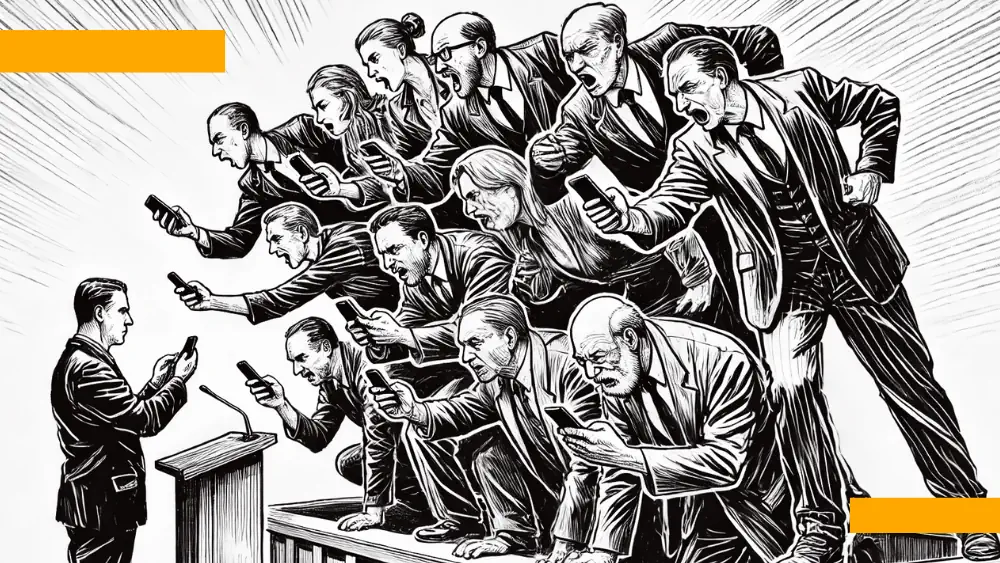 illustration: DALL-E
Disinformation, regardless of whether it takes the form of conspiracy theories, fake news or unverified information, has become an integral part of the contemporary media landscape. Understanding the dynamics of this phenomenon is crucial to understanding the mechanisms of shaping public opinion and the ways in which information spreads in the digital age.
Study conducted in the UK shows that nearly 44 percent of people shared posts on social media with the intention of influencing the decisions of others. This indicates the significant role of motivation related to the need for power in shaping online behaviour.
Similar trends can also be observed in the non-virtual world - dominant people are usually more active in communication: they speak longer and more often. In situations where they lack real power to influence and control, people use information to influence others and maintain or take a leading position in their social networks.
The Need for Power Motivates
– In our research, we decided to check how people driven by power motives use social media to increase their influence, with particular emphasis on the frequency of sharing disinformation – explains Professor Małgorzata Kossowska, leader of the DigiPatch project, who runs the Behaviour in Crisis Lab at the Institute of Psychology, Faculty of Philosophy of the Jagiellonian University.
A total of over 1.8 thousand people took part in the four studies. The researchers examined the participants` declarations regarding sharing posts on social media, and used an information sharing simulation task to verify their actual behaviours.
– We assumed that people who seek to influence others, exercise control, and achieve higher positions in power structures are actively involved in social media and are proportionally more likely to spread information, including disinformation, than those less motivated by power – Kossowska describes.
The results of the study, conducted in collaboration with researchers from University College London and the University of Kent, were published in Computers in Human Behavior.
– Our results showed that social media users driven by the need for power overshared other people`s posts and news headlines, including disinformation. This tendency applied to both declared everyday behaviours on social media and the results of the simulation task – explains Professor Małgorzata Kossowska.
The respondents who were motivated by power disseminated disinformation to a disproportionate extent (in relation to all posts). They did so despite being aware of having disseminated disinformation in the past.
Disinformation Harms Reputation
– The results suggest that people motivated by the need for power are not driven by the pursuit of accuracy of the information they share, and that true and false posts have similar priorities in their sharing choices. In this way, they ensure their influence over other network users – the researcher comments.
Interestingly, power itself - real or perceived - was not associated with the spread of disinformation, i.e. with the proportion of posts shared containing false information.
– Motivations related to the need to gain prestige and a sense of importance were also not associated with increased spreading of disinformation. Sharing disinformation can potentially damage reputation if such a practice is revealed. Therefore, spreading disinformation would not meet the needs of these people – Kossowska explains
The researcher points out that the relationship between the motivation to gain power and the spread of disinformation may be stronger when false content is consistent with the views or political goals of the people sharing it.
– This is an important issue, especially in the context of debates suggesting that the excess of disinformation is fuelled by some elites in power and political activists striving to gain power – emphasises Professor Małgorzata Kossowska.
source: PAP SceinceinPoland.pl


COMMERCIAL BREAK

New articles in section Law in media
National security as a tool to limit press freedom
KFi
Governments worldwide increasingly use national security to suppress information legally. Reporters Without Borders issued a comprehensive report "National security as A weapon against Journalism", which carefully analyzes this growing global trend.
Blood in the world of media. The IFJ report on journalists killed in 2025
KFi
The International Federation of Journalists has published a shocking document titled 2025 Killed List Report. The increase in violence against media workers is visible all over the world. Last year, 128 people lost their lives. They die because of their courage in revealing facts that authorities try to hide.
Ai in disinformation. Operation Matryoshka and personalization of fakes
Anna Mikołajczyk-Kłębek
The increasing use of artificial intelligence to generate false content and profiled disinformation are trends that will shape the disinformation landscape in the coming years, according to Dr. Wojciech Kotowicz, an expert from the University of Warmia and Mazury (UWM) in Olsztyn, Poland.
See articles on a similar topic:
How South Asian Governments Manipulate Media. IFJ Report
Krzysztof Fiedorek
South Asia faces significant challenges in maintaining democracy and press freedom. The latest report from the International Federation of Journalists (IFJ), "Artificial Independence: The Fight To Save Media and Democracy," highlights the growing threats faced by journalists, including violence, financial pressures, and censorship.
Cybersecurity Market and Online Privacy in Poland in 2022
BARD
The value of the cybersecurity market in 2022 will exceed PLN 2 billion, according to the latest report by PMR analysts. At the same time, a study by ClickMeeting reveals that over 57% of Poles believe they are already taking proper care of their online privacy.
How to Detect Pegasus on Your Phone and Protect Against Spying
RINF
The nature of spyware is to remain as hidden as possible, making it difficult to detect on a device. However, some mechanisms can help verify if a smartphone has been compromised.
Local Media in Poland - Court Cases
Bartłomiej Dwornik
Investigative journalists in local newsrooms often remain in the shadow of their colleagues from national outlets, despite frequently being the first to uncover a scandal.