 po polsku
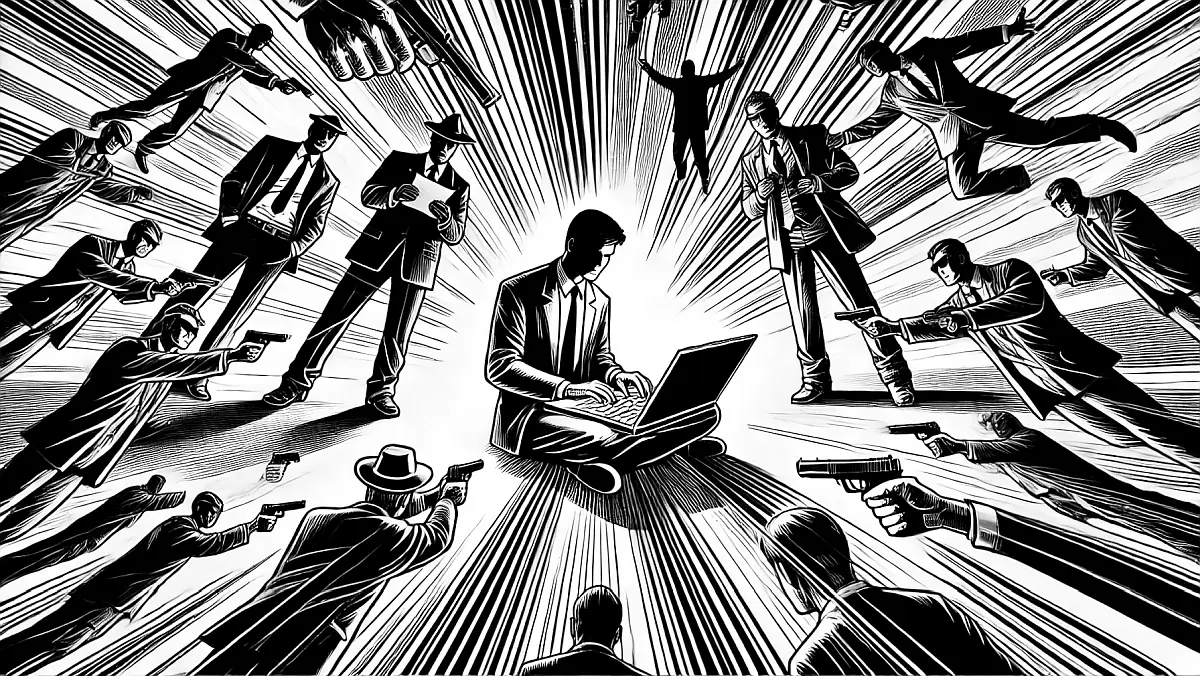 illustration: DALL-E
According to members of the European Parliament, investigative journalism requires institutional support and incentives. One such incentive may be the Daphne Caruana Galizia Prize awarded by the European Parliament.
- On the one hand, newsrooms are hesitant to invest in investigative work, and on the other, journalism faces increasing pressure from governments, large organizations, and corporations. One example is defamation lawsuits against journalists, which are often intended to intimidate them - says Raffaella De Marte, Head of the Media Department at the European Parliament, in an interview with Newseria. - Institutions must protect journalists, stand for media freedom, and allow investigative journalists to do their job because it is a pillar of democracy and a guarantee of a democratic system`s quality.
- Investigative journalism is extremely important, even in Europe, where not everyone can work without censorship or access all information. That’s why we need many journalists who explore important topics, ask questions, and aren’t satisfied with the first answer they get - says Juliane Hielscher, Director of the Berlin Press Club and a member of the Daphne Caruana Galizia Journalism Prize jury. - I’m from Germany and I’m not afraid to ask questions or publish information on any topic. But I think that in some countries, journalists are in a much harder situation.
SLAPPing journalists
In May 2024, the European Media Freedom Act (EMFA) came into force and has been fully applied since August. It requires member states to protect media independence and ban any pressure that could influence editorial decisions. It also introduces rules for financing media and online platforms. Last year, the EU also adopted an anti-SLAPP directive to prevent legal actions aimed at intimidating journalists, researchers, and activists.
Unjustified lawsuits, or SLAPPs (strategic lawsuits against public participation), are used by governments, politicians, and other organizations to suppress criticism and censor inconvenient content. Under EU law, such lawsuits are to be dismissed at an early stage, and plaintiffs are to be penalized. Poland is currently working on implementing the directive`s provisions.
- The European Union should continue to take action to protect journalists, support press and speech freedom, and defend journalists` rights to ask tough questions - says Juliane Hielscher.
Who sues? Politicians and businessmen on the offensive
According to the CASE Report 2024 analysis, the main plaintiffs are: entrepreneurs and corporations – 45.2% of cases and politicians and state officials – 35.5% of cases.
The highest compensation amounts in SLAPP lawsuits reach several million euros. In Greece, journalists covering a spy scandal were sued for 3.3 million euros by Grigoris Dimitriadis, a former advisor to the prime minister.
The vast majority of SLAPP lawsuits are civil cases, but in many countries criminal law is still used to prosecute journalists and activists.
| Type of Proceeding | Share of SLAPPs (%) |
|---|---|
| Civil lawsuits | 64.3% |
| Criminal proceedings | 21.7% |
| Mixed lawsuits (civil + criminal) | 2.1% |
| Administrative lawsuits | 0.9% |
| Injunction lawsuits | 5.8% |
It’s worth noting that some lawsuits also have a political basis. In Bosnia and Herzegovina, after reinstating criminal defamation laws in 2023, over 50 lawsuits against journalists were filed in March 2024 alone. Organizations such as the UN and OSCE warn that these changes may be used to silence critical voices.
According to the European Parliament, journalism is in an increasingly difficult situation. One reason is the rise of new digital channels used to spread disinformation. Although Europe remains the safest continent for journalists and media freedom, in some countries they are intimidated and attacked. Russia’s war against Ukraine has worsened the situation.
Daphne Caruana Galizia Prize
- How could the European Union support investigative journalists so they feel safer? There’s an ongoing fight – I don’t want to say war – in the Culture Committee, and also with other committees, to ensure that the media and journalist programs are not merged. They are currently combined in one group, but we care deeply about making it clear that journalism work requires sovereignty, specific conditions, and independence – in short, it must be separated from industrial efforts like fighting fake news or Russian propaganda. I hope we will win this fight because supporting independent journalism is crucial, especially where independence is under threat - says Bogdan Zdrojewski, Polish Member of the European Parliament. - Decisions will probably be made next year. We must ensure that journalists feel supported by all authorities, not just in politics but also in science and the creative community.
Among the EU initiatives recognizing the work of journalists is the Daphne Caruana Galizia Prize - named after the Maltese investigative journalist and blogger who exposed corruption at the highest levels and was murdered in October 2017.
- She died from a car bomb explosion 18 years ago. She was an investigative journalist whose work was inconvenient because she exposed the true face of political and economic power – and she paid for it with her life. We want to encourage investigative journalists to continue Daphne Caruana Galizia’s legacy through their work. That’s why we award them annually for uncovering the truth about corruption or hidden aspects of our reality in Europe and beyond - explains Raffaella De Marte.
This year, 20,000 euros were awarded for an investigation into the Russian shadow fleet, which revealed financial connections that allowed Russia to bypass sanctions and continue trading oil. Journalists uncovered how Western shipowners made over 6 billion dollars by selling 230 old tankers that strengthened Russia’s shadow fleet. The investigation was coordinated by the journalism platform Follow the Money in cooperation with outlets from Belgium, Denmark, Germany, Greece, Italy, Norway, the Netherlands, and the UK.
- This is a scandal the European Union must look into, because such actions weaken us and support Putin’s war and aggression against Ukraine. They allow Russia to sell its oil worldwide while also posing an ecological disaster risk in the Baltic Sea and other bodies of water. This must be addressed - emphasizes the Head of the Media Department in the European Parliament. - We were deeply moved when the winners announced that they would donate the 20,000-euro prize to journalism consortia in Russia and Ukraine to help continue their work and support investigative journalism in both countries.
source: biznes.newseria.pl


COMMERCIAL BREAK

New articles in section Media industry
Information laundering. Russian propaganda returns as news from China
KFi
Russian intelligence agencies use complex tactics to mask the primary source of their harmful narratives. Patrycja Krzyśpiak from NASK details this dangerous process of information laundering in a recent report.
Health disinformation on the internet. Diagnosis from an algorithm
Katarzyna Czechowicz
Health disinformation can cause a cancer patient to see a doctor when it is too late for effective treatment. It can also undermine trust in doctors and public institutions. As a result, people may refuse to cooperate even during a real external threat, experts warn.
Feminatives are not a given. How Polish women talk about their professions
SWPS
Polish women still rarely use female job titles. This comes from the latest report by the Center for Research on Social Relations at SWPS University. Women's professional activity proved to be a significant factor in using feminatives.
See articles on a similar topic:
DAB+ Radio. What is Digital Radio Broadcasting?
Krzysztof Fiedorek
Digital radio broadcasting technology, compared to traditional analog radio, provides higher sound quality, better resistance to interference, and more additional features during transmission. However, it’s not without drawbacks and raises concerns among broadcasters.
Cyberviolence and hate disguised as a joke. The RAYUELA report on youth
Krzysztof Fiedorek
The study conducted in five countries reveals a harsh truth. Online violence is not evenly distributed. It is a digital map of prejudice that hurts the most those who stand out the most. "It’s just a joke." That’s how violence often begins. Young people go through it in silence.
Review of media from around the world. See what they are buzzing about [LINK]
AUTOPROMOCJA Reporterzy.info
What is the media buzzing about? A review of the headlines of the most important newspapers and websites. Events of the day, country, world, media market, economy, sport, foreign media, and even gossip and curiosities. In real time and 24 hours a day. We invite you!
Can a Robot Be Good Boss? Researchers from SWPS Look for Answers
SWPS
A robot giving orders at work is no longer a science fiction scenario - it's a research topic. Scientists from SWPS University in Poland set out to find out whether a robot can effectively manage human workers.