 po polsku
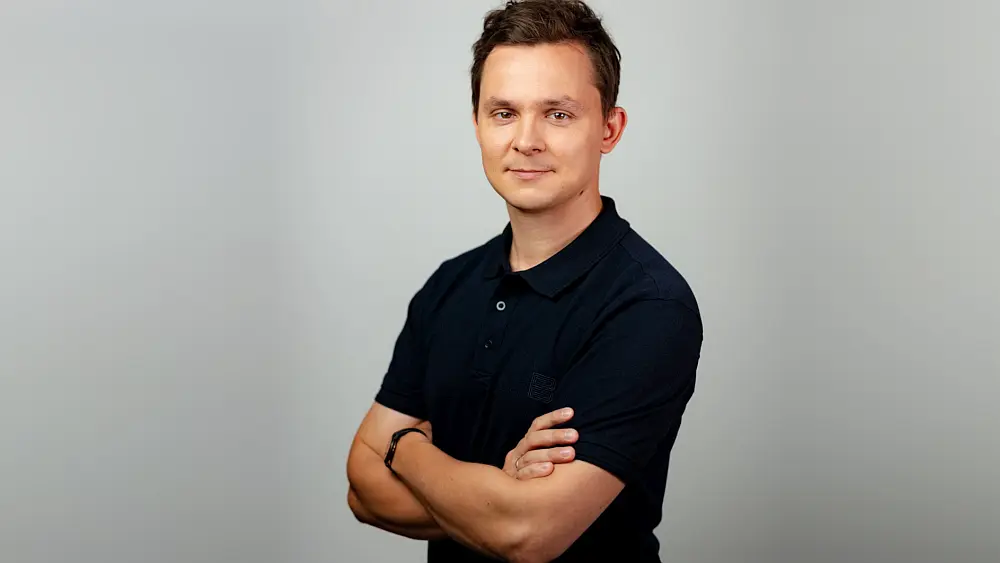 Wojciech Psiuk, music supervisor from Sirens, photo: Sirens
TikTok is the fastest-growing entertainment platform in the world, with a billion users globally and already 100 million in Europe. Not long ago, TikTok was said to be mostly for teenagers. Today, it’s a mature communication-entertainment platform where major brands, micro-entrepreneurs, artists, and diverse creators operate.
How should a company select music for TikTok content? When should you choose a song from a music library, and when should you commission a composer to create one? How do you purchase a license to use a particular piece?
TikTok delivers a wealth of entertainment, music, sports, and educational content daily. Artists debut here, not only musicians but also creators of crafts, graphics, posters, jewelry, clothing, and promoters of various interests and passions.
Official data provided by TikTok shows that 63% of users browse the platform to boost their mood, and 62% to discover something new. TikTok’s potential is recognized not only by global brands and large companies but also by micro-entrepreneurs and artists. Brands like New Balance, CCC, and Maybelline have embraced the platform. In 2021, the number of active advertising accounts nearly doubled from quarter to quarter.
More and more companies and artists want to leverage TikTok to establish a presence. Wojciech Psiuk from Sirens, a company that professionally selects music for films, series, and ads, argues that music on TikTok is particularly important. Why?
- In social media as we knew it a few years ago, images were the primary communication tool. Users posted beautiful photos, sometimes with descriptions. Changes in social media, driven by digitalization, mean short videos, reels, and other tools where the combination of image and music takes center stage - emphasizes Wojciech Psiuk. - This is especially true for TikTok. Music is the foundation of this platform, and choosing the right song for videos is essential to creating engaging content and achieving success in this app. Companies and micro-enterprises looking to leverage TikTok to build a competitive edge should keep this in mind.
How to Choose Music for Visual Content?
- First: Define the Goal You Want to Achieve
Emotions are key on TikTok, and music can move, amuse, intrigue, or scare viewers. In short, it can evoke a wide range of emotions to engage users with published content. Music can greatly impact sales goals in advertising campaigns. It can spark interest in a product or service, inspire participation in a platform challenge, or elicit an engaged response to presented content.
Music that is well-synced with visuals complements and often reinforces the message. Together, they form a cohesive whole. Therefore, it’s worth defining the goal of the video early in the production process.
- Second: Music Library, Composer, or Another Source?
Music, or rather a license to use music, can be acquired from various sources. The simplest and most affordable option is music libraries, or banks of musical works. However, it’s important to be aware of certain legal restrictions that may limit how you intended to use the music. This issue applies only to certain libraries, and it’s wise to consult with a music supervisor who can also help quickly locate suitable recordings from vast library collections.
In addition to music libraries, a film or ad can be enhanced by synchronizing with a well-known hit. Licensing such a song, creating a cover, or changing the original lyrics requires a much larger budget than using a music library. Another option is to search for a lesser-known track that achieves the desired effect. Of course, music can also be composed from scratch, tailored precisely to the ad, which is especially advantageous when the on-screen action calls for it. A music supervisor`s role is to provide creative support in music searches and suggest the appropriate licensed music source based on factors specific to each campaign.
- Third: Obtaining a License and Other Considerations
Obtaining a music license can take hours or even months, particularly if the song has multiple authors. To determine the licensing fee, you need to define the scope of rights the license will cover – such as which media, territories, and duration for which the ad will be broadcast.
The licensing process can be simple and brief, but not always. Sometimes lengthy negotiations with authors or their heirs are necessary, along with tax considerations (especially for international transactions), or resolving disputes among authors before signing agreements. This is why the support of professional music consultants, who can anticipate various scenarios in this process, is invaluable.


COMMERCIAL BREAK
New articles in section Skills and knowledge
Audience mismatch. When and why short videos ruin a Youtube channel
KF × Gemini Deep Research
Shorts viewers stay in "swipe mode" and expect instant gratification. Watching a 30-minute documentary requires an active decision to click and a willingness for longer engagement. In specific situations, these mixed signals can seriously harm a Youtube channel.
How to reliably report uncertain data. A scientific meta-analysis
KFi
Numbers and mathematical intervals have a calming effect on news consumers. Political views, intelligence levels, or reader education do not alter how people process information about incomplete knowledge. Here are the results of dozens of media experiments regarding trust in the press.
Artificial intelligence in film and tv production. McKinsey report
Krzysztof Fiedorek
Global spending on video content has reached $180 billion, and the average viewer consumes it for 7.5 hours a day. Streaming is growing by 13%, while traditional television is losing 4% annually. As much as 84% of the US market is controlled by the seven largest players. Additionally, AI technology is reshuffling the market.
See articles on a similar topic:
Writing for the Web. The 4x4 Rule for Content Optimization
Bartłomiej Dwornik
How do you craft a Google-friendly title, what’s the ideal article length, and how often should you use keywords? A guide for those writing for websites.
Common Mistakes in Creating Content for Websites
Bartłomiej Dwornik
What mistakes should you avoid at all costs to ensure that the often costly work of attracting traffic from Google doesn’t go to waste? Check out the insights from experts asked by Interaktywnie.com in the recently published report "Search Engine Marketing."
How LLMs are reshaping SEO. Smart content strategies for the age of AI
BDw
For years, SEO was a fairly predictable game. Pick the right keywords, optimize your content, and watch your website climb the rankings. But today, a silent revolution is underway - and it`s being led by large language models (LLMs) like ChatGPT, Claude, Gemini, and DeepSeek.
Where to Publish Your Own Articles? Start Your Own Website
Bartłomiej Dwornik
If you want to try your hand at citizen journalism or simply run your own thematic blog, you’ll eventually face the decision of choosing your own domain name and server to host your site. In a report published by Interaktywnie.com, you’ll find expert advice on how to get started.