 po polsku
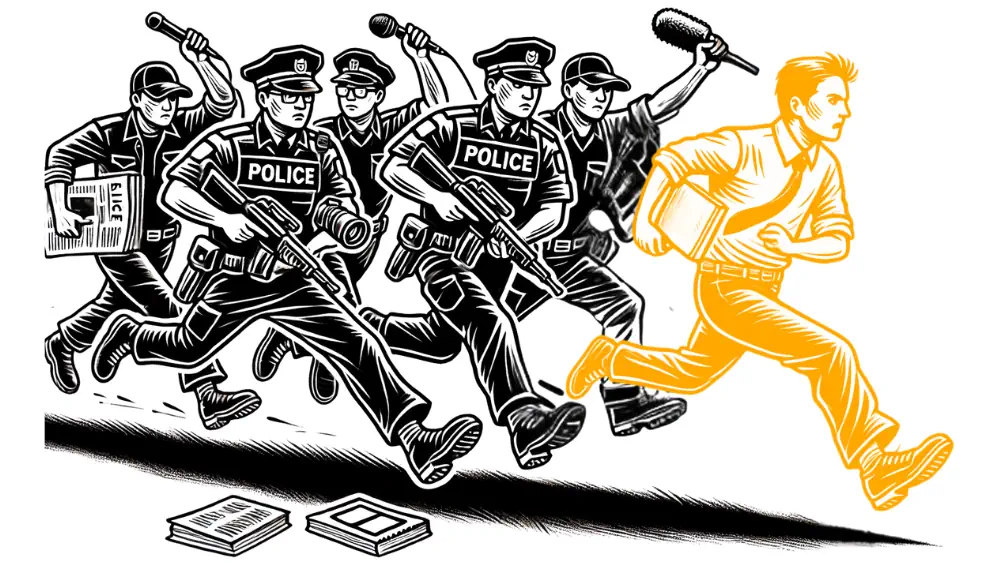 illustration: Bing AI
Press freedom, considered a cornerstone of democratic societies, is increasingly under threat. The report "In Record Year, China, Israel, and Myanmar Are World’s Leading Jailers of Journalists," published by the Committee to Protect Journalists (CPJ), provides alarming data on the persecution of journalists worldwide. By the end of 2024, at least 361 journalists were imprisoned globally, reflecting the worsening state of press freedom.
361 Journalists Behind Bars. What Do the Numbers Say?
Data from the CPJ report shows that 2024 recorded the second-highest number in history, following the record-breaking 370 journalists imprisoned in 2022. Despite a slight decrease in the global number of detainees, the situation has worsened in many countries. The worst statistics were reported in China, Israel, and Myanmar, which together account for nearly one-third of global cases.
| Rank | Country | Number of Journalists Imprisoned |
|---|---|---|
| 1 | China | 50 |
| 2 | Israel | 43 |
| 3 | Myanmar | 35 |
| 4 | Belarus | 31 |
| 5 | Russia | 30 |
| 6 | Egypt | 17 |
| 7 | Iran | 16 |
| 7 | Eritrea | 16 |
| 7 | Vietnam | 16 |
These numbers illustrate the diverse strategies employed by regimes worldwide. In China, accusations of anti-state activities dominate, in Israel, administrative detentions are common, and in Myanmar, journalists often face military tribunals.
China. The World`s Leading Repressor
China remains the top jailer of journalists for yet another year. By the end of 2024, at least 50 media representatives were in Chinese prisons, although CPJ estimates this number could be much higher due to strict information censorship.
Most Notable Cases:
- Sophia Huang Xueqin, a well-known journalist and activist, was sentenced to five years in prison for "inciting subversion of state power."
- Qurban Mamut, former editor of a Uyghur magazine, is serving a 15-year sentence for "political crimes" related to publishing articles on human rights.
China employs an extensive technological surveillance system, monitoring journalists` communications and blocking access to information. In the Xinjiang region, repression against the Uyghur minority has reached new levels, also impacting independent media.
Israel. A Sharp Rise in Arrests
Israel, which a few years ago was not among the leading persecutors of journalists, ranked second in the CPJ list in 2024. A total of 43 journalists were detained there, many of them Palestinians. Most were arrested under administrative laws allowing detention without trial.
| Reason for Detention | Number of Cases |
|---|---|
| Administrative arrests | 15 |
| Terrorism-related charges | 20 |
| Other | 8 |
Conditions in Israeli prisons leave much to be desired. According to the CPJ report, journalists face degradation and restricted access to legal assistance. Israel also uses legal measures, such as banning Al Jazeera from its territory, to limit coverage of conflicts in the Gaza Strip.
Myanmar. Repression Under Military Rule
Since the 2021 coup, Myanmar has remained among the top nations persecuting journalists. In 2024, 35 media representatives were imprisoned, many convicted under anti-terrorism laws.
Examples of Sentences:
- Shin Daewe, an investigative journalist, was sentenced to life imprisonment for allegedly using a drone, considered an act of terrorism.
- Sai Zaw Thaike, a reporter covering the aftermath of a cyclone, received a 20-year prison sentence for "incitement."
These repressions are part of the junta`s broader strategy to suppress any form of resistance to its rule.
Belarus and Russia. Authoritarianism in Eastern Europe
In Europe, repression of journalists is concentrated in Belarus and Russia. In Belarus, where Alexander Lukashenko’s regime has long used brutal measures against opposition, 31 journalists were imprisoned. In Russia, nearly half of the 30 detainees were Ukrainian journalists imprisoned in territories occupied by Moscow.
Comparison of Repressions:
- Belarus: Journalists are imprisoned for covering protests or working in independent media. Many are convicted on charges of "extremism."
- Russia: Repression affects not only Russian journalists but also those from Crimea and eastern Ukraine. Victims often face military tribunals.
What Lies Ahead?
The outlook for press freedom in the coming years is alarming, but it depends on the actions of the international community, human rights organizations, and governments themselves. Several scenarios and forecasts emerge:
- Increasing Use of Surveillance Technologies
Authoritarian regimes will increasingly use digital technologies such as artificial intelligence, facial recognition systems, and advanced internet surveillance methods to monitor and silence independent voices. Countries like China may export their technological solutions to other states, strengthening global media control. - New Laws Restricting Freedom of Speech
The adoption and reinforcement of anti-cyber, anti-terrorism, or "fake news" laws may be used as tools to penalize independent journalism. This trend is evident in countries like Russia, Egypt, and Bangladesh, with similar regulations potentially emerging elsewhere. - Increased Pressure on Journalists in Conflict Zones
Armed conflicts, such as the war in Ukraine or tensions in the Gaza Strip, will continue to increase the risk of repression against reporters. Journalists covering such events may face both physical and legal attacks. - International Community Response
Human rights organizations such as CPJ or Reporters Without Borders will continue efforts to defend journalists. Diplomatic pressure on regimes violating human rights and the implementation of international sanctions against perpetrators of repression will be critical. - Growing Role of Journalists in Exile
More journalists may choose to work abroad to avoid repression in their own countries. The importance of independent media operating in exile is likely to grow, providing uncensored reporting.
Despite grim predictions, hope lies in advancing technologies enabling anonymous journalism and increasing international awareness of the need to protect press freedom. Much, however, depends on global solidarity and the response of democratic nations to these challenges.
* * *
The report, prepared by the Committee to Protect Journalists (CPJ), presents data on journalists imprisoned for their work as of December 1, 2024. It includes cases confirmed to be related to journalistic activities, excluding missing persons or those held by non-state entities. CPJ applies rigorous criteria based on documentation, reports from local and international organizations, and interviews with victims’ families.
The full material is available for free at https://cpj.org/


COMMERCIAL BREAK
New articles in section Media industry
Video market in Asia. Traditional media companies in retreat
KFi
The Asian video market will reach a value of 15 billion dollars. Investments are moving to streaming and cinema. Sports broadcasts and local films drive growth. Media Partners Asia presented the report "Asia Video Content Dynamics 2026".
Information laundering. Russian propaganda returns as news from China
KFi
Russian intelligence agencies use complex tactics to mask the primary source of their harmful narratives. Patrycja Krzyśpiak from NASK details this dangerous process of information laundering in a recent report.
Health disinformation on the internet. Diagnosis from an algorithm
Katarzyna Czechowicz
Health disinformation can cause a cancer patient to see a doctor when it is too late for effective treatment. It can also undermine trust in doctors and public institutions. As a result, people may refuse to cooperate even during a real external threat, experts warn.
See articles on a similar topic:
Artificial Intelligence in the Media. Reuters Digital News Report 2024
Krzysztof Fiedorek
AI has gained prominence in recent years, and its application in producing, distributing, and presenting news content continues to grow. However, this development is met with mixed feelings by audiences, which has significant consequences for media trust and its future.
Virtual Influencers Perceived as More Authentic than Real Ones
Agnieszka Kliks-Pudlik
Virtual influencers are fictional, generated characters that imitate the appearance and behaviour of real people. They have millions of followers. They are perceived by Gen-Alpha as even more authentic than real people, which creates many challenges, says Dr. Ada Florentyna Pawlak.
The print media market 2025. Three global trends
Krzysztof Fiedorek
The market value is 359.53 billion dollars, yet the erosion is visible to the naked eye. The decline for newspapers will amount to -2.3 percent. Despite this, print retains strength: it generates 76 percent of subscription revenues and enjoys 82 percent consumer trust. The future of the industry is defined by hybrid strategies and niche specialization.
Television, Trends, and Viewer Habits. EBU Report
Krzysztof Fiedorek
Young Europeans watch television for an average of only 72 minutes a day, and in some countries, less than 30 minutes. Traditional television is giving way to TikTok, Netflix, and YouTube. Viewer habits are changing dramatically before our eyes. What does this mean for the future of media?