 po polsku
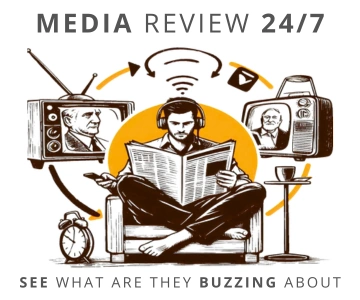
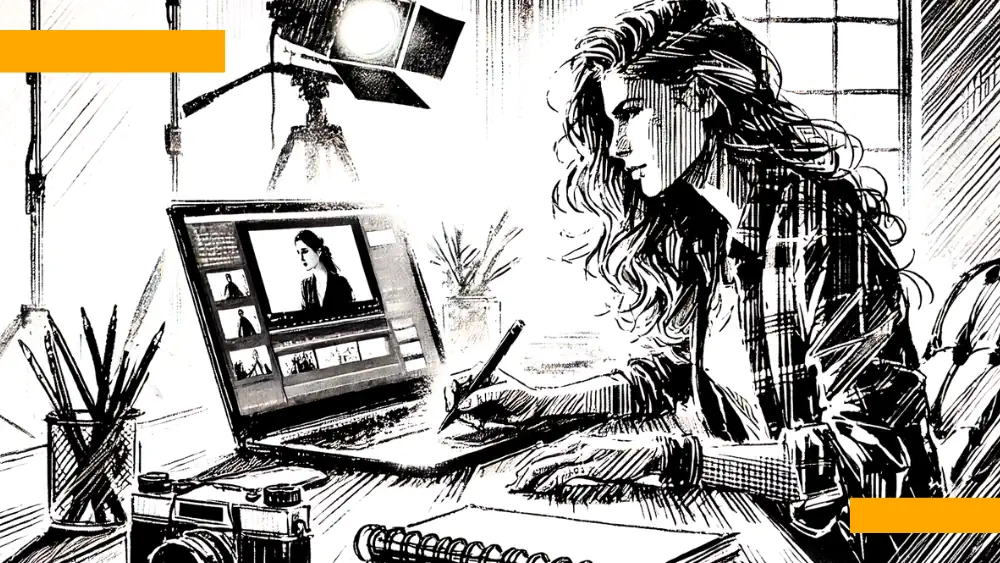 illustration: DALL-E
Publishers and companies today seek specialists who can combine words with images and modern technology. Freelancing in 2025 is more often associated with peace of mind than uncertainty, as the number of assignments and income levels remain stable for the majority of respondents.
The latest data on this subject is presented in the report "Freelancing in Poland 2025: Between Stability and Adaptation," published by Useme.
The new face of creative and communication services
The most popular industries in which Polish freelancers operate focus on companies` online presence and visual content. The largest group consists of website specialists and video and animation creators. Meanwhile, there is a noticeable decline in interest in simple copywriting, which enjoyed much greater popularity just two years ago. Companies now expect support that translates realistically into visibility in search engines and social media.
Freelancers no longer limit themselves to a single task but offer comprehensive promotion strategies. The table below shows the popularity distribution of various specializations among independent communication and media experts:
| Specialization | Market share |
| Photography, video, and animation | 26% |
| 2D and 3D graphics | 22% |
| Copywriting | 15% |
| Analytics and advertising campaigns | 14% |
| Translations | 14% |
| SEO | 7% |
In the age of algorithms and growing online competition, enterprises increasingly turn to independent experts for support. This allows companies to flexibly adjust their promotion strategy without the need to expand permanent teams. Freelancers thus become a natural extension of marketing and PR departments, providing specialized knowledge in a project-based model.
The transformation of the media market also forces creators to care for their own image. Professionalism in executing assignments is no longer enough to effectively compete for the best projects. Experts emphasize that building a recognizable personal brand is becoming an essential part of every freelancer`s work in the communication sector.
Financial stability in the shadow of large corporations
The economic situation of self-employed individuals in the media industry largely depends on the type of clients they serve. The greatest stability and highest incomes are guaranteed by cooperation with large companies and corporations. It is this market segment that most readily uses the services of external specialists to supplement competencies or scale activities without creating new full-time positions.
The freelancer is no longer a temporary solution but a permanent element of the business model for many enterprises. Companies consciously maintain relationships with selected experts, which translates into continuity of orders and regularity of payments. This strategy allows both parties to better plan budgets and communication activities.
Here are the most important reasons why the media and communication industry opts for cooperation with freelancers:
- Need for quick access to niche competencies that the permanent team does not possess.
- Flexibility in managing costs of marketing and image projects.
- Ability to scale activities during periods of increased market activity.
- A fresh external perspective on brand communication and its media presence.
This cooperation model fits perfectly into current realities, as it adapts more easily to economic changes than full-time employment. Freelancing functions as a market stabilizer, allowing resources to be moved smoothly to where they are most needed at any given moment. This is particularly important in the dynamic media industry, where trends change from month to month.
Building a personal brand as the foundation of success
In a world of information overload, a service offer often gets lost in a crowd of similar proposals. This is why an authentic story and the values behind a specific creator become so important. Today, clients look not just for an efficient contractor, but for a partner they can identify with and trust regarding image matters.
How images hack your brain? 60,000 times faster than words! 👇
The process of building visibility requires independent experts to master several important skills:
- Precisely defining one`s market niche and unique value for the client.
- Regularly sharing expert knowledge on social media and industry platforms.
- Caring for consistent visual and substantive messaging across all communication channels.
- Actively establishing business relationships during events and conferences.
This is no longer just an addition to creative work, but the basis for securing valuable contracts. Those who can effectively manage their own image are much less likely to complain about a lack of assignments. In the media industry, a personal brand serves as a kind of quality certificate that opens doors to cooperation with the most prestigious brands.
The role of artificial intelligence in creative work
The emergence of advanced algorithms caused quite a stir in the media industry. Some specialists feared that technology would replace them in their daily duties. However, reality shows that modern tools function as an enhancement of creative potential rather than as competition. Most respondents perceive them as support that allows for increased efficiency and productivity.
Do you trust AI-created news? You might have NO CHOICE 👇
Specialists who boldly implement solutions based on automation and algorithms achieve better financial results. This stems from the fact that they can complete projects faster or offer clients an entirely new quality of service.
Artificial intelligence finds application in many areas of a media professional`s work:
- Rapid analysis of large sets of market data and audience behavior.
- Generating content ideas and creating initial project drafts.
- Automation of repetitive tasks in administration and project management.
- Personalization of communication messaging on an unprecedented scale.
For many independent specialists, technology is becoming an opportunity for growth, provided they learn to derive real benefits from it. It is important for freelancers to go with the flow of change rather than fight it. The ability to learn quickly and the readiness to change the direction of one`s business are traits that distinguish the winners of the current transformation from those who stay behind.
The full report can be downloaded for free at
https://useme.com/pl/blog/raport-freelancing-w-polsce-2025/


COMMERCIAL BREAK
New articles in section Media industry
Information laundering. Russian propaganda returns as news from China
KFi
Russian intelligence agencies use complex tactics to mask the primary source of their harmful narratives. Patrycja Krzyśpiak from NASK details this dangerous process of information laundering in a recent report.
Health disinformation on the internet. Diagnosis from an algorithm
Katarzyna Czechowicz
Health disinformation can cause a cancer patient to see a doctor when it is too late for effective treatment. It can also undermine trust in doctors and public institutions. As a result, people may refuse to cooperate even during a real external threat, experts warn.
Feminatives are not a given. How Polish women talk about their professions
SWPS
Polish women still rarely use female job titles. This comes from the latest report by the Center for Research on Social Relations at SWPS University. Women's professional activity proved to be a significant factor in using feminatives.
See articles on a similar topic:
Influencers Earn Too Much. No Fluff Jobs Report
KrzysztoF
According to nearly 70% of Poles, influencers earn too much, and 54% feel the least affection for them out of all professions. Only politicians receive equally low regard among respondents surveyed by No Fluff Jobs. On the other hand, nurses and… farmers are considered underpaid.
New generations and the end of traditional news. Reuters Institute report
Krzysztof Fiedorek
Traditional news media are losing touch with the youngest generation of audiences, who grew up in a digital environment. Young people aged 18 to 24 spend time online continuously and expect publishers to take a fresh approach to presenting reality, according to a report by the Reuters Institute.
How the Media Talk (or Stay Silent) About Climate. Reuters Institute Report
Krzysztof Fiedorek
Although climate change is becoming increasingly noticeable worldwide, the media have failed to maintain growing interest in the topic. The report "Climate Change and News Audiences 2024" shows that audience engagement with climate topics has remained almost unchanged for several years.
Information bubbles. Study of Instagram, Tik Tok and You Tube users
Urszula Kaczorowska
A staggering 96 percent of the time people spend online is spent on anything but consuming information. This, says Professor Magdalena Wojcieszak means ‘we have over-inflated the issue of information bubbles and disinformation.’